
Sleeping Better at Last: One Patient’s Journey Through the Sleep Disorder Center
- Category: Sleep
- Posted On:
- Written By: Nora Wallace

Lompoc resident Ron Rule knew it was time to do something about his snoring. His wife wasn’t even able to sleep in the same room with him at night because of the noise, and he found himself getting noticeably – but uncharacteristically -- tired in the afternoons and evenings.
He’d previously tried an anti-snoring apparatus while he slept. It was effective in helping with his snoring, but was an unwieldy, uncomfortable mouthpiece.
So Ron decided to get a referral from his primary care physician to learn if he had sleep apnea. He made an appointment at Lompoc Health – Sleep Disorder Center to learn more.
“I thought I slept good, but apparently I don’t,” says Ron, 69. “My wife’s been dealing with this for five years.”
He was particularly pleased that he could undergo a sleep study at a site within walking distance of his home, rather than having to travel.
“The sleep study is right here in Lompoc,” he said. “If you’re in Santa Maria or a different town, it’s a trip. For me, it was right down the street. It was easy, simple for me.”
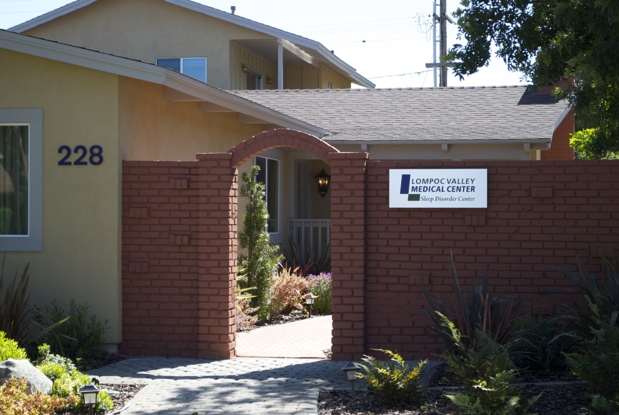
Ron arrived at around 9:30 p.m. at the Sleep Disorder Center at 228 S. D St. He was already prepared and brought items such as a toothbrush and pajamas, since he received a “how-to guide” sent to him before the study.
To ensure all the appropriate sleep-related data was collected, Ron was attached to an array of sensors by Mansoor Hussain, the Sleep Disorder Center’s Registered Polysomnographic Technologist. Though Ron noted that he’s not used to sleeping with wires and sensors attached to his body and head, he said he said he was able to eventually sleep.
“The room is very nice,” he says. “They do a good job of setting it up for people. It’s like a hotel bedroom. You don’t hear anyone else.”
His only struggles, he said, were because he either reads or watches television before bedtime, which was not allowed as part of the study. He also does not typically fall asleep on his back, so Hussain accommodated him by allowing him to roll onto his shoulder to fall asleep, which also took him a bit longer than usual because of the unfamiliar environment.
“I was trying to do exactly what they wanted,” Ron recalls. “The wires on my face and nose weren’t intrusive. It didn’t feel like creepy crawlers. It might sound Frankensteinish, but it wasn’t. I was very comfortable with how they treated me, but uncomfortable falling asleep.”
About two weeks later, Ron was told during his primary care appointment that the study concluded he did indeed have sleep apnea.
“The study was classic,” he says. “I’d stop breathing for a few seconds in the middle of sleeping. My oxygen went down. I thought I just snored, but it was caused by something.”
His physician recommended he start using a CPAP machine. A CPAP is a Continuous Positive Airway Pressure machine used to treat breathing disorders such as obstructive sleep apnea. The patient wears the machine while sleeping, and it delivers a steady, continuous stream of pressurized air through a mask. The air pressure keeps the throat airway open during sleep, preventing interruptions in breathing, snorting and improving oxygen levels.
Many of his friends use the equipment, including his son. They all give glowing reviews.
“We’re heading in the right direction,” Ron said, several months after starting to use the machine. “I’m excited about coming out the other end and realizing my sleep is doing some good, as opposed to me waking up tired.”
Since starting the use of the CPAP, Ron said he’s not falling asleep in his lounge chair as much as he used to during the day, and he’s no longer snoring.
“It only took me a couple days to adapt. “My wife, Sherri, is especially happy with it as well. I’m very satisfied and encourage anyone with these symptoms to head in for a study. I’d recommend it to anybody.”
Lompoc Health recognizes the connection between sleep and good health. Our Sleep Disorder Center is designed with comfort in mind. Large private rooms are outfitted with queen-size beds, comfortable mattresses, luxurious comforters, and fluffy pillows. To make an appointment, call 805-737-8700.


.jpg)